Building Durable Automotive PCBs for Harsh Environments
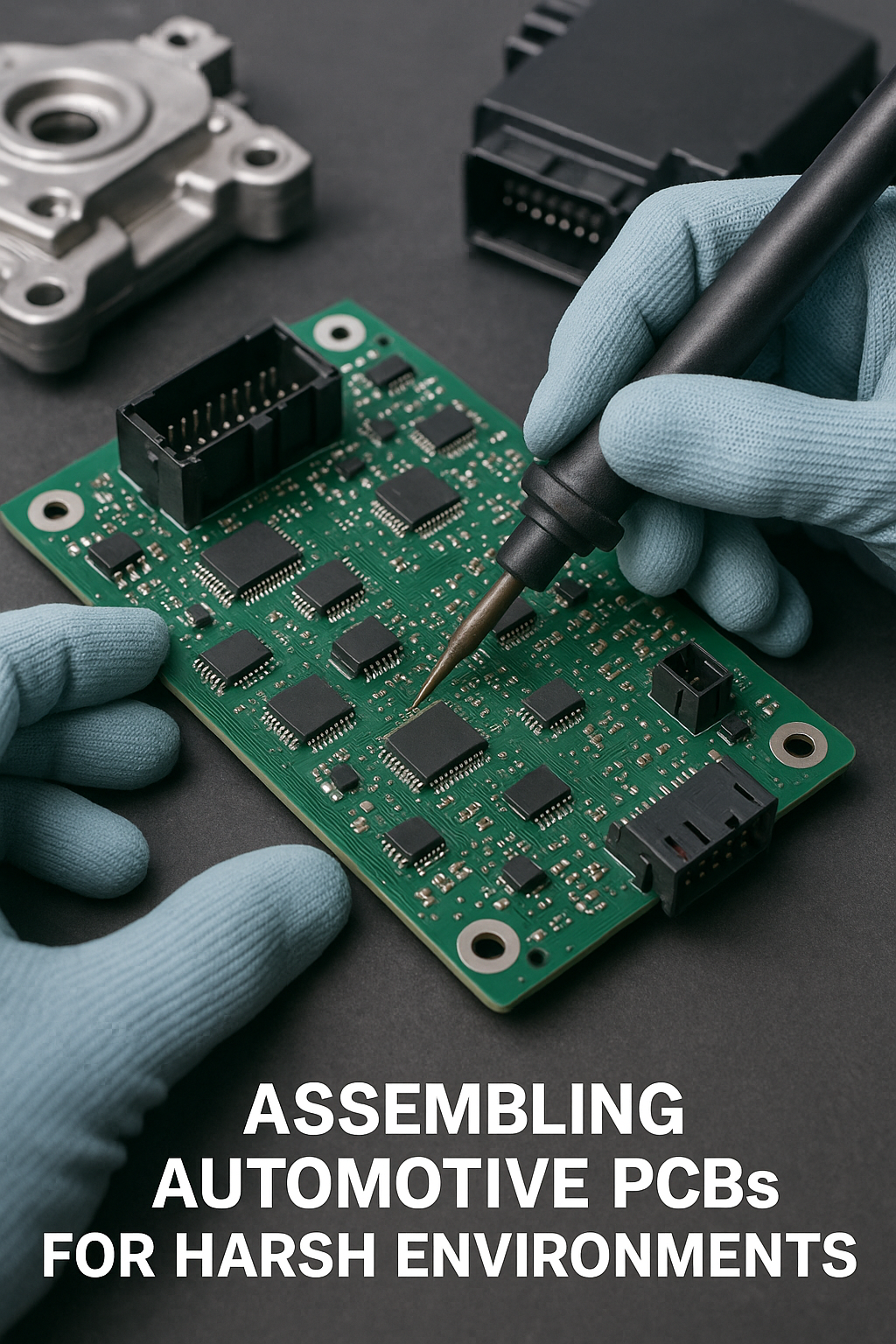
Automotive electronics operate in some of the most demanding conditions imaginable. From the scorching heat of an engine compartment to the freezing temperatures of a mountain pass, every component inside a vehicle must deliver consistent performance and reliability.
At the heart of these systems lies the Printed Circuit Board (PCB), a crucial element that powers everything from engine control units and infotainment systems to safety and lighting modules.
Designing and manufacturing durable automotive PCBs requires a deep understanding of materials, processes, and quality standards. This is where PCB Assembly Services for automotive Industry play a critical role in ensuring longevity and reliability.
1. Understanding Environmental Challenges
Automotive PCBs face extreme conditions that can affect their performance over time. They must withstand:
- Temperature fluctuations (−40°C to +150°C or more)
- Vibration and mechanical stress from constant motion
- Exposure to moisture, oil, and dust
- Electromagnetic interference (EMI) from high-frequency systems
Failure in any of these conditions can lead to malfunction or safety hazards. Therefore, PCB design and assembly must focus on durability, material strength, and stability under harsh operating environments.
2. Material Selection for Reliability
The choice of substrate and materials directly impacts PCB performance. For automotive-grade boards, high-temperature laminates like FR-4, polyimide, or metal-core PCBs are often used to maintain structural integrity.
Solder masks and surface finishes such as ENIG (Electroless Nickel Immersion Gold) or HASL (Hot Air Solder Leveling) add corrosion resistance and improve long-term reliability.
EMS providers with experience in PCB Assembly Services for automotive Industry ensure these materials are carefully selected and tested to meet OEM quality standards.
3. Design Techniques for Durability
Durable automotive PCBs are designed with robustness in mind. Key design considerations include:
- Thicker copper traces for better current handling and heat dissipation
- Conformal coating or potting to protect against moisture and contamination
- Optimized component placement to reduce stress and vibration impact
- Thermal vias and heat sinks for effective temperature control
These techniques collectively help the PCB perform reliably across the vehicle’s lifespan.
4. Advanced Manufacturing and Testing Practices
Building durable PCBs requires precision manufacturing and rigorous testing. Advanced Surface Mount Technology (SMT) ensures accuracy in component placement and soldering.
Automated Optical Inspection (AOI), X-ray analysis, and functional testing verify that each board meets quality and performance benchmarks.
Reputed EMS partners also implement Automotive Production Part Approval Process (PPAP) and Failure Mode and Effects Analysis (FMEA) to ensure product reliability and compliance with automotive standards.
5. Continuous Improvement and Traceability
In the automotive sector, every PCB must meet traceability and regulatory standards such as IATF 16949 and ISO 9001. EMS providers maintain complete traceability of components, production batches, and quality checks.
This transparency not only ensures accountability but also facilitates continuous improvement in future production runs.
Conclusion
Durable automotive PCBs are the foundation of vehicle reliability. Their design and assembly require specialized materials, precise processes, and a deep understanding of automotive conditions.
By collaborating with experienced providers offering PCB Assembly Services for an automotive Industry, OEMs can ensure that their electronic systems withstand real-world challenges—delivering performance, safety, and longevity in every drive.
